Loading...
Serving Faribault, MN and surrounding areas. (507) 497-9188
Faribault pergolas built with frost-depth footings, permit-managed from start to finish, and framed for Minnesota wind and snow so your outdoor space holds up season after season.
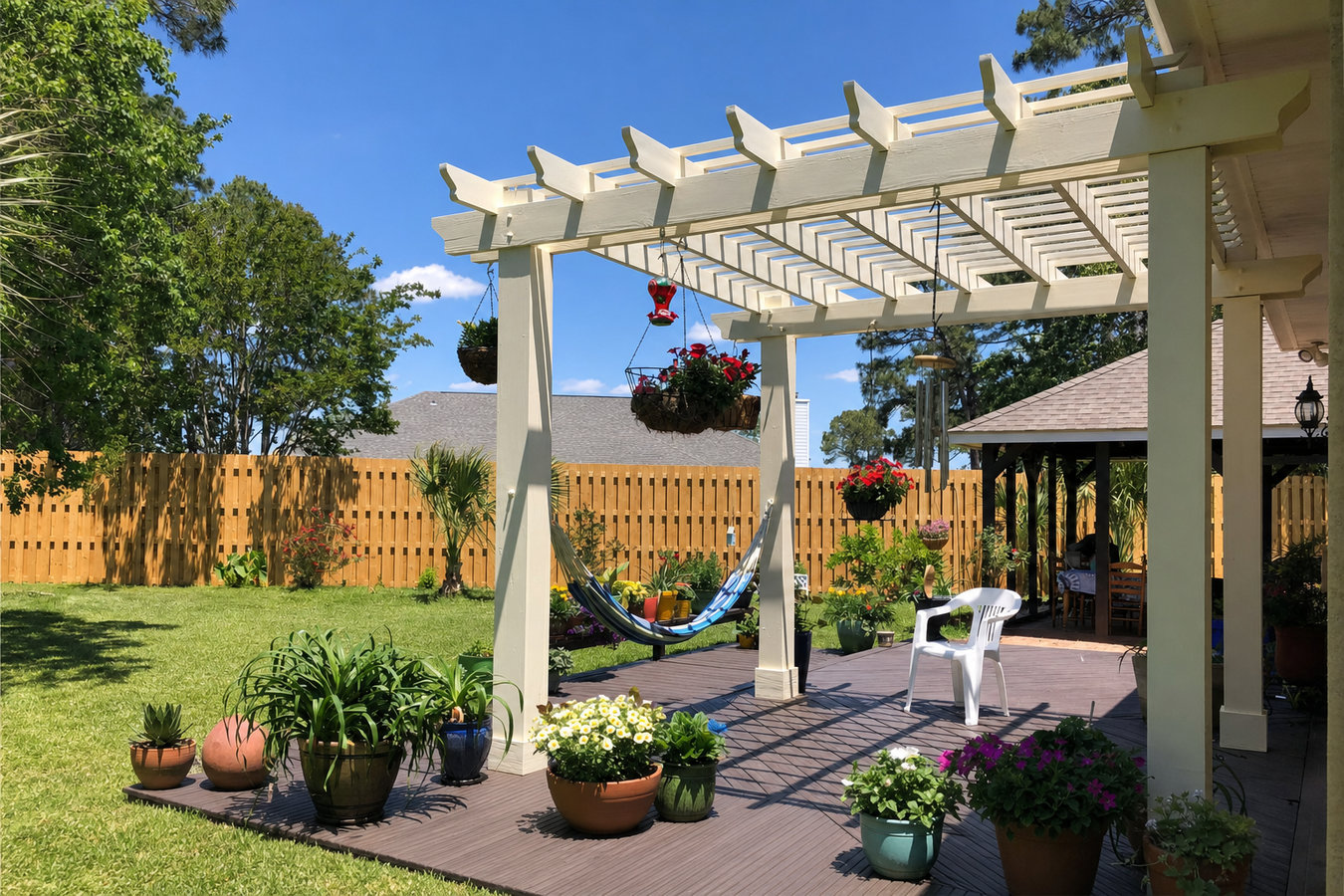
Pergola installation in Faribault involves digging and setting post footings below the frost line, framing the beam-and-rafter structure above, and pulling the required city building permit - most residential pergolas take one to three days of active work once the permit is in hand and the concrete footings have cured.
The detail that matters most in Faribault is footing depth. Rice County ground freezes to 42 to 48 inches in a hard winter, and any post anchored shallower than that will be pushed upward or tilted by the freeze-thaw cycle over time. This is the single most common reason pergolas in Minnesota start to lean - not the framing above, but the footings below. Choosing covered decks and patio covers alongside a pergola is a natural next step if you want full rain protection in addition to shade and structure.
Faribault's outdoor building season runs roughly from late April through October, with the most reliable weather for concrete work in May through September. Contractors book up quickly once spring arrives - reaching out in March or April gives you the best chance of a May or June installation. Once you are on the schedule, the permit process adds a few days to two weeks before the first shovel goes in the ground.
If your outdoor space gets direct sun all afternoon and you find yourself heading inside by midday, a pergola changes how many hours your yard is actually usable. Faribault summers bring plenty of bright, hot afternoons, and even partial overhead cover makes a patio or deck comfortable for hours longer each day. The investment pays off every time you stay outside instead of retreating.
If your deck floats in the middle of the yard with no visual anchor or sense of enclosure, it rarely feels like a destination. A pergola gives the space definition - a reason to be out there - and makes it feel like an actual outdoor room rather than an afterthought. Homeowners consistently say the change in how they use the yard is immediate.
Minnesota's summer UV exposure is intense, and patio furniture left fully exposed to the sun fades and degrades quickly. If you are replacing cushions, repainting furniture, or moving everything under a tarp each season, even partial overhead coverage from a pergola can extend the life of everything underneath it. The structure pays for itself faster than most homeowners expect.
If you have been thinking about adding usable space to your home but not the cost or disruption of a room addition, a pergola is one of the most cost-effective ways to extend your living area outdoors. In Faribault's short but genuinely warm summer season, a well-designed outdoor space gets used heavily from May through September - that is real value for a fraction of what an interior addition costs.
We build both freestanding and attached pergolas throughout Faribault and the surrounding area. A freestanding pergola stands on its own posts and can go anywhere in your yard - it gives you more flexibility on placement and is often simpler to permit. An attached pergola connects directly to your home's exterior and creates a seamless transition from a back door or sliding glass door to the outdoor space. Both options can be combined with a outdoor kitchen deck to create a full backyard entertaining zone with permanent cooking and seating areas.
Material choices include cedar, pressure-treated pine, vinyl, and aluminum. Cedar is the most popular option for homeowners who want a natural look - it resists moisture and insects naturally and develops a warm patina over time. Pressure-treated pine is more affordable and holds up equally well in Minnesota's climate with basic maintenance. Vinyl and aluminum pergolas require essentially no maintenance but typically cost more upfront. For homeowners thinking about long-term care, the University of Minnesota Extension has solid guidance on protecting outdoor wood in Minnesota's climate.
Suits homeowners who want flexibility in placement - a freestanding structure can go anywhere in the yard and often has a simpler permit path than an attached design.
Right for homeowners who want a seamless flow from a back door or sliding glass door to the outdoor space - connects directly to the home's exterior wall.
A good fit for homeowners who want a natural look that ages well - cedar resists moisture and insects and develops a warm silver-gray tone over time without paint or stain.
The most cost-effective option for a durable outdoor structure - pressure-treated pine holds up well in Minnesota's climate with basic sealing and periodic maintenance.
Building a pergola in Faribault is not the same as building one in Texas or Virginia. The frost depth here - 42 to 48 inches in a hard winter - means footings must be significantly deeper than in warmer climates. The City of Faribault also requires permits for permanent outdoor structures, including most pergolas on concrete footings. Both of these factors add cost and time compared to a simple pergola install in a milder state, but both are necessary for a structure that stays level and legally documented over the long term. Faribault's older housing stock adds another layer of consideration for attached pergolas - homes built before 1970 sometimes have siding or structural details at the attachment point that need inspection before design is finalized. Homeowners in Faribault and nearby Northfield benefit from working with a contractor who has completed projects in this specific climate rather than one applying general Midwest averages.
The outdoor living season in Faribault runs roughly from late May through September - about four months. That is a limited window, and a pergola that gives you shade, structure, and a defined outdoor space makes every one of those days more usable. Timing the installation for late spring means you are sitting under it in June rather than watching it get built in August. Contractors who know Faribault plan for permit timing, concrete curing, and footing depth as a standard part of every project quote - not as surprises after work begins.
We ask a few quick questions - roughly the size of the space, whether you want the pergola freestanding or attached to your home, and your general timeline. This is a low-pressure conversation, not a sales call. We respond within one business day and schedule a site visit shortly after.
We visit your yard, check the ground conditions, note where utility lines run, and talk through placement options with you. You leave the visit with a written estimate that breaks down materials, labor, and permit fees - so you can compare it clearly against any other quotes you receive.
Once you approve the quote, we apply for the required building permit through the City of Faribault. Review typically takes a few business days to two weeks. Materials are ordered during this window so everything is staged and ready when the permit clears.
The crew digs footing holes to below the frost line, pours concrete, and waits for the city inspection before setting posts. Once footings are verified and solid, framing goes quickly - most pergolas are fully assembled within a day. We walk the finished structure with you and cover any maintenance steps before leaving.
We respond within one business day, handle the city permit for you, and give you a written estimate before any work begins.
(507) 497-9188The ground in Faribault freezes 42 to 48 inches deep in a hard winter. Every pergola we build has footings set below that depth so the structure stays plumb through every freeze-thaw cycle. A contractor who skips this step is setting you up for a leaning structure within a few seasons. We do not cut corners on footing depth - the city inspector confirms it before concrete is poured.
The City of Faribault requires permits for permanent outdoor structures, and we manage the entire application and inspection process for you. A permitted pergola is documented in public records, which matters when you sell your home or file a claim. You do not need to visit city hall or track down paperwork - we handle it. Minnesota Dept. of Labor and Industry - contractor licensing.
Faribault sees significant winter snow accumulation and periodic high winds. A pergola designed for a milder climate may not hold up here - beams and rafter spacing need to account for the weight of a heavy snow event. We size every structure for local conditions, not a catalog template from a warmer state.
We have completed pergola and outdoor structure projects throughout Faribault and the surrounding Rice County area. We know the local permit process, the frost depth requirements, and the soil conditions common in this part of southern Minnesota. That local experience means fewer surprises and a project that moves on schedule. North American Deck and Railing Association.
Every pergola project we take on in Faribault starts with an on-site visit and a written estimate that covers materials, labor, and permit costs before any work begins. We build to the conditions that actually exist here - not to a catalog photo from a warmer climate.
Pair a pergola with a purpose-built outdoor kitchen deck for a complete backyard cooking and entertaining setup.
Learn MoreA fully covered deck adds solid rain and sun protection where a pergola provides open shade and structure.
Learn MoreWe install pergolas throughout Faribault and the surrounding region, including these communities.
Faribault's build season books fast - reach out now for a free on-site estimate and a written quote that covers everything.